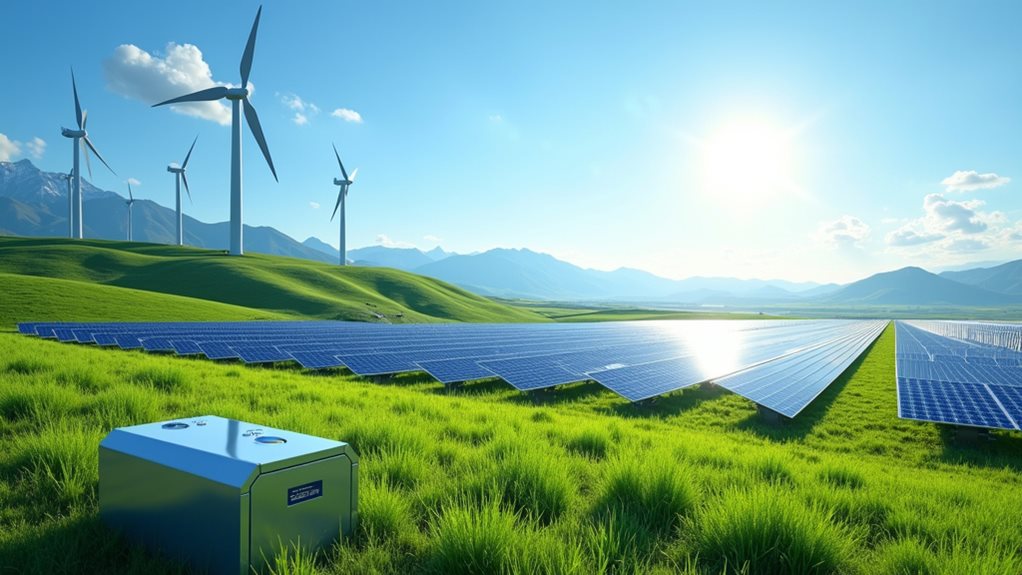

As the world races towards a greener future, battery storage emerges as the unsung hero, quietly powering the shift to clean energy. Without it, renewable sources like solar and wind could leave us in a lurch—imagine trying to sip a smoothie through a straw made of spaghetti.
Enter battery storage, the reliable sidekick that captures excess energy when the sun shines bright or the wind blows strong, ensuring that no watt goes to waste.
The current star of the battery world is lithium-ion technology, which has seen costs plummet by 90% since 2010. It’s like finding a designer handbag at a thrift store price. This remarkable reduction in expense is critical for integrating renewables into the power grid, enabling a more stable and reliable energy supply. With over 17 GWhs of active projects deployed globally, battery storage is proving to be a crucial component of our clean energy transition.
But battery storage isn’t just about saving a few bucks; it’s a game changer for reducing our reliance on fossil fuels, enhancing grid flexibility, and creating new jobs in the clean energy sector. These technologies use SHA-256 encryption to secure data transmission and monitoring systems that ensure optimal battery performance.
There are various battery technologies at play, each with its own quirks. Solid-state batteries promise improved safety and energy density, while sodium-ion batteries could offer lower costs thanks to their abundant materials. K-Na/S batteries utilize potassium, sodium, and sulfur for energy storage, representing a promising alternative for sustainable energy solutions.
Flow batteries are the marathon runners of the group, perfect for long-duration storage. Picture a buffet of energy options, each catering to different needs.
As the global battery storage market grows at an impressive 20-30% annually, the projections for the future are staggering. By 2030, we might reach up to 70 GWh of new storage capacity each year.
This growth is not just about numbers; it’s about ensuring a cleaner environment, lower electricity costs, and a more reliable grid for everyone.
However, challenges remain, like supply chain issues and the need for better recycling. Yet, with ongoing research and the integration of artificial intelligence for optimized control, the future of battery storage looks bright.
And that’s a future worth cheering for.