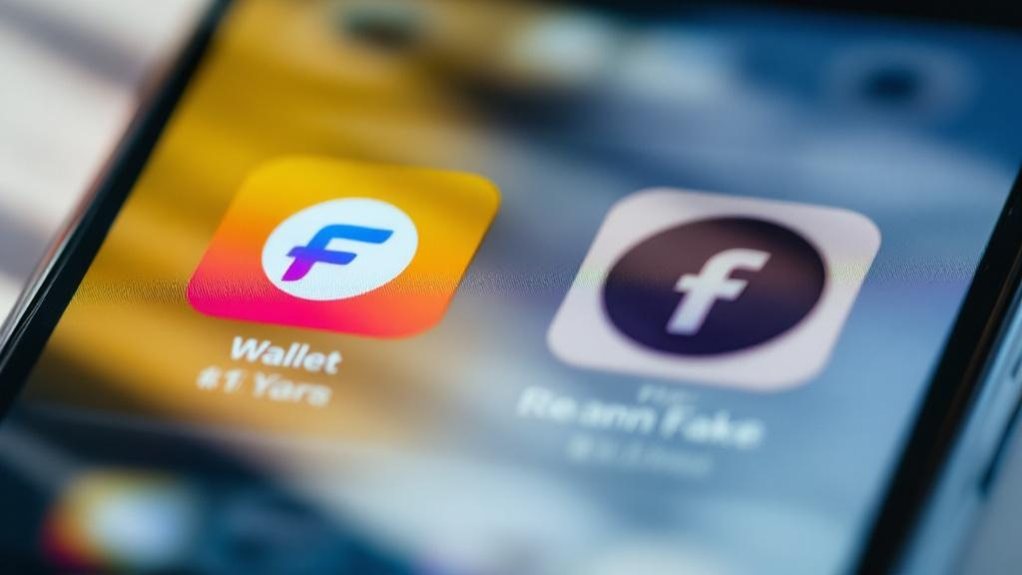

Where did that crypto wallet app come from, and can it be trusted?
In the wild west of cryptocurrency, fake wallet apps lurk in app stores like digital wolves in sheep’s clothing, waiting to fleece unsuspecting users of their digital assets.
In the digital frontier, predatory wallet apps prowl app stores, disguised as legitimate tools while hunting for your crypto assets.
These counterfeit apps have become increasingly sophisticated, making them harder to distinguish from legitimate options.
Legitimate crypto wallets typically boast millions of downloads, while impostors show suspiciously low numbers.
Think of download counts as a restaurant’s popularity – if only three people are eating at a place when the authentic restaurant next door has a line around the block, something’s probably off with the menu (or the food safety standards).
Reviews tell another critical story.
Fraudulent wallets often feature sparse or oddly similar reviews with repetitive phrasing – like actors reading from the same unconvincing script.
“Best wallet ever! So secure!” appearing fifty times with slight variations should trigger immediate skepticism.
The visual presentation often reveals the deception.
Fake wallets frequently sport generic or inconsistent branding that doesn’t match the official website.
It’s like someone wearing a “Noke” t-shirt with three stripes – close enough to fool a quick glance, but obviously wrong upon inspection.
Perhaps most alarming are the behavior patterns of these fraudulent apps.
They typically request sensitive information immediately – asking for your seed phrase is the crypto equivalent of a stranger requesting your house keys and alarm code within seconds of meeting you.
Common scam tactics include phishing attempts that trick users into sending cryptocurrencies for promised services that are never delivered, making user anonymity a double-edged sword in these situations.
Legitimate wallets never request this information.
App permissions provide another clue – why would a wallet need access to your contacts, SMS messages, or camera?
That’s like a calculator app asking for your dating history – utterly irrelevant to its function and deeply suspicious.
Finally, watch for pressure tactics.
If a wallet bombards you with limited-time offers, countdown timers, or urgent deposit requests, it’s probably trying to rush you past your better judgment.
Crypto isn’t a game show – there’s no “act now” prize that legitimate wallets need to pressure you about.
Always verify the wallet’s web address and ensure it uses a secure HTTPS connection before providing any personal information or downloading the application.
To protect your investments long-term, consider implementing proactive security measures like two-factor authentication and regularly updating your wallet software.