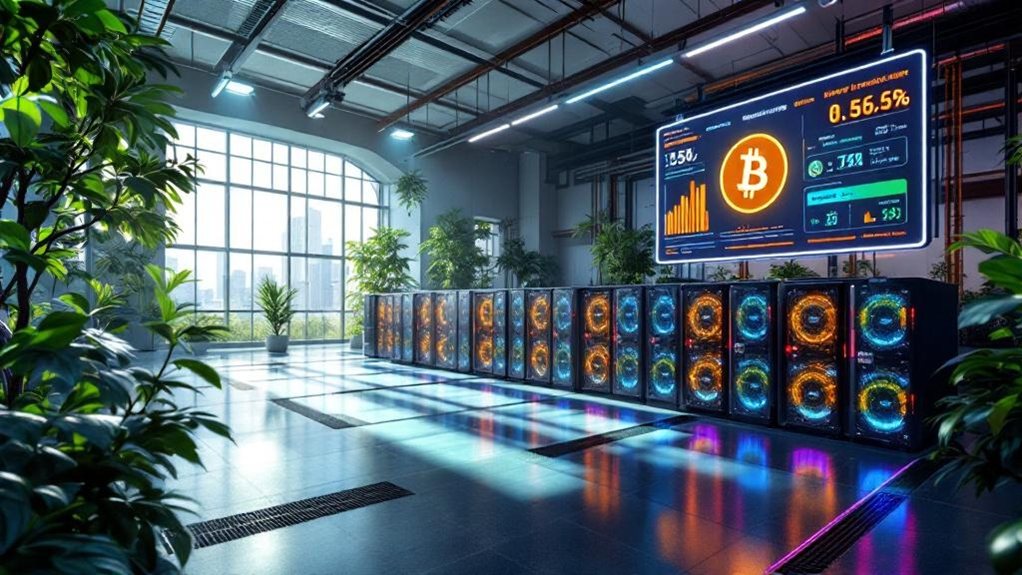

Once the domain of tech enthusiasts running noisy machines in basements, mining has evolved into a multi-billion dollar ecosystem with nation-states now entering the game.
The recent surge of Bitcoin beyond $100,000 has catalyzed this transformation, turning what was once a speculative venture into a legitimate asset class attracting institutional players.
The landscape has shifted dramatically with technological innovation leading the charge.
Next-generation hardware has revolutionized efficiency—think of these machines as race cars that somehow get better gas mileage with each model year. Bitmain’s Antminer S23 Hydro exemplifies this trend with its remarkable 9.7 J/TH efficiency, a dramatic improvement from 1,200 J/TH models in 2013.
Meanwhile, automation and AI have transformed operations from manual monitoring to predictive systems that can anticipate maintenance needs before failures occur.
Pakistan’s bold strategy exemplifies this new era, allocating 2,000 megawatts of surplus power toward mining operations.
This isn’t just dabbling—it’s a structured national approach projected to generate $1.8 billion annually in Bitcoin revenue.
That’s roughly 17,000 BTC per year flowing into national coffers, creating a fascinating case study in state-level cryptocurrency strategies. Mining pools like Foundry USA have become essential infrastructure for these large-scale operations, distributing rewards more consistently than solo mining efforts.
For everyday investors, cloud mining platforms have democratized access to this once-technical field.
Services like OPTO Miner now offer turnkey solutions where users can effectively “rent” mining power without needing to understand the difference between a hash and a hashtag.
These platforms handle the technical heavy lifting while distributing daily earnings to users through daily payouts for various investment levels.
The industry’s environmental footprint is evolving too.
Remember when crypto mining was portrayed as an environmental villain?
The narrative is changing as operations increasingly leverage renewable energy sources, with solar and hydroelectric power becoming preferred options for new installations.
Regulatory frameworks are finally catching up, with governments implementing specific mining permits and compliance standards.
This maturation signals blockchain mining‘s shift from wild west to regulated industry—still innovative but increasingly integrated into conventional financial and energy systems.