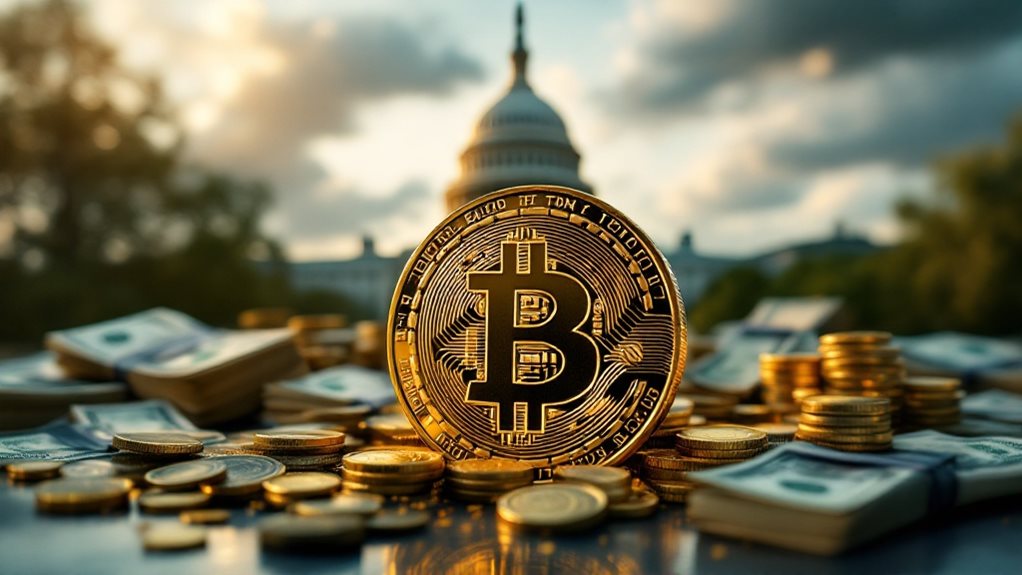

While the crypto industry has weathered its share of regulatory storms, Donald Trump’s recent Executive Order establishing a Strategic Bitcoin Reserve marks an unprecedented shift in how the U.S. government approaches digital assets. The executive order directs federal agencies to retain rather than sell confiscated cryptocurrency, creating what amounts to a national Bitcoin stockpile without spending taxpayer dollars.
The numbers behind this mandate are staggering. Uncle Sam currently holds approximately 198,012 Bitcoin—valued at around $16 billion—most of which came from criminal seizures like the infamous Silk Road case. Most of these assets were accumulated through law enforcement seizures rather than direct purchases by the government. Imagine the government as an accidental crypto whale, swimming in digital assets acquired through law enforcement actions rather than investment decisions.
The feds: crypto’s reluctant whale, sitting on a $16 billion Bitcoin fortune from busting digital crooks
This new directive represents a complete reversal from previous policies. Federal agencies have historically auctioned seized crypto, missing out on nearly $17 billion in potential revenue by selling almost half of the 400,000 Bitcoin they’ve confiscated over time. The reserve’s strategy is overseen by David Sacks, who has been appointed as the White House Crypto Czar. That’s like finding a winning lottery ticket, tearing it up, then watching the numbers get called on TV.
The mandate doesn’t stop at Bitcoin. It creates a “Digital Asset Stockpile” for other cryptocurrencies like Ethereum and Solana, while explicitly prohibiting agencies from developing central bank digital currencies (CBDCs). This has raised eyebrows among critics who question whether the government should be stockpiling volatile assets beyond just Bitcoin. The timing is particularly notable as the market shows characteristics of a bull market phase, with increasing investor confidence and rising cryptocurrency valuations.
Market reaction has been mixed, with some viewing the reserve as legitimizing cryptocurrency while others worry about increased government control. The crypto community’s response resembles a family reunion where half the relatives are thrilled about the new in-law while the others are checking their silverware.
Meanwhile, the Treasury Secretary faces the monumental task of auditing all these holdings, bringing transparency to a notoriously opaque situation. As U.S. agencies increase their blockchain scrutiny, the irony isn’t lost on observers: the government that once viewed crypto with suspicion may soon become one of its largest HODLers.