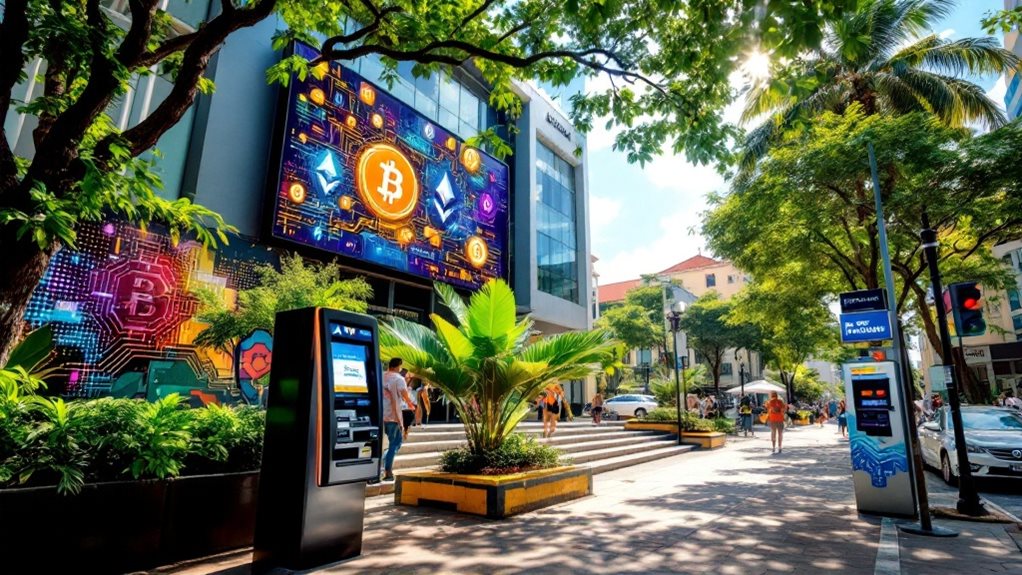

How does a city embrace cryptocurrency without changing its laws? Panama City just found a clever workaround that would make a financial contortionist proud. Rather than pushing legislation through the traditional channels (where previous attempts stalled in Senate committees), the city council simply approved crypto payments for public services through a partnership with a local bank.
It’s like installing a digital currency translator at the city treasurer’s office. When residents pay their taxes, permits, fines, or even bus tickets using Bitcoin, Ethereum, USDC, or Tether, the bank instantly converts these digital assets into good old U.S. dollars before they reach municipal coffers. This nifty arrangement satisfies existing laws requiring public institutions to receive funds in USD.
Panama City’s crypto solution functions as a financial interpreter, converting digital currencies to dollars before they ever touch government accounts.
“We’re not changing what money is, we’re just letting you use your digital assets as a payment method,” could have been the city’s tagline. The city council’s notable decision marks Panama City as the first public institution in the country to accept cryptocurrency payments. This approach leverages the trustless environment that makes DeFi attractive while maintaining traditional financial frameworks. Unlike El Salvador’s bold move to make Bitcoin legal tender, Panama City keeps cryptocurrency strictly optional while maintaining traditional financial workflows.
Mayor Mayer Mizrachi championed this initiative, scheduled to officially launch at the Panama Blockchain conference. The arrangement creates a win-win scenario: crypto enthusiasts gain practical utility for their digital assets, while the city receives stable dollar payments without exposure to crypto’s infamous volatility.
This approach is like having your crypto cake and eating it too. The city never directly touches cryptocurrency—the bank handles all conversion—creating a seamless compliance bridge between digital innovation and existing financial regulations.
For Panama City residents, this means the digital coins that previously lived only in investment portfolios can now pay for everyday government interactions. The rollout will focus initially on core municipal services, with potential for expansion as the system proves itself.
As the first government institution in Panama to accept crypto for public services, Panama City creates a template that other municipalities might follow—proving that sometimes innovation doesn’t require legislative overhaul, just creative problem-solving and the right banking partner.