
The S.710 Crypto ATM Fraud Bill, introduced by Senator Richard Durbin on February 25, 2025, represents a significant legislative effort to combat the rising wave of cryptocurrency scams targeting vulnerable populations.
The bill aims to amend Title 31 of the United States Code by implementing safeguards at virtual currency kiosks—those increasingly ubiquitous crypto ATMs that have popped up like mushrooms after rain in convenience stores nationwide.
At its core, S.710 requires crypto ATM operators to register with the Treasury Department and implement several consumer protection measures.
The legislation directly addresses the alarming trend of elderly Americans becoming primary victims of these schemes, as evidenced by the nearly 2,700 complaints received by the FBI in 2023 alone.
Imagine trying to withdraw your life savings to send to that “stranded prince” who emailed you—the bill would cap transactions at $2,000 daily and $10,000 over the first two weeks.
For transactions over $500, you’ll need a live person to verbally confirm you’re not being scammed—kind of like having a financial guardian angel ask, “Are you sure about this?”
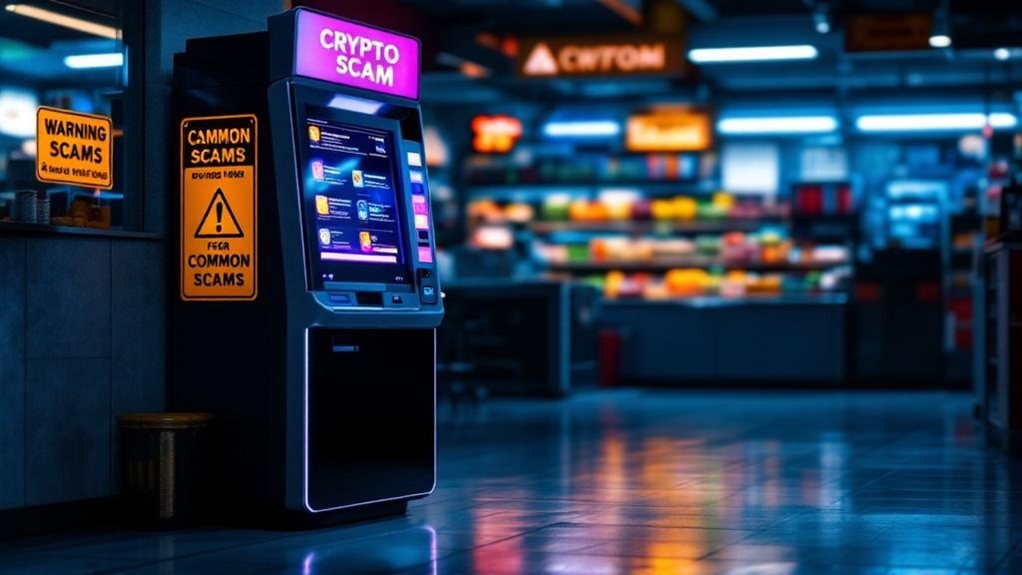
The bill also requires operators to prominently display warning signs about common scams at their kiosks to educate potential victims before they complete transactions.
Staying vigilant against scams is essential for protecting your hard-earned investments in the cryptocurrency space.
The legislation also mandates that operators provide detailed receipts for every transaction, including time, place, amount, transaction hash, and refund policy information.
These digital breadcrumbs would help law enforcement track down scammers who’ve convinced grandma that the IRS accepts Bitcoin payments.
Perhaps most importantly, S.710 guarantees full refunds for fraudulent transactions reported within 30 days—a consumer protection measure that’s practically unheard of in the “wild west” of cryptocurrency.
The bill has garnered support from consumer advocacy groups including Americans for Financial Reform, National Consumers League, and the National Consumer Law Center.
It’s currently under review by the Senate Banking, Housing, and Urban Affairs Committee.
While offering substantial protection for vulnerable users, the legislation may create hurdles for legitimate investors.
Transaction limits could restrict larger investments, and the additional compliance requirements might drive up operational costs for ATM providers.
Nevertheless, as crypto continues its march toward mainstream adoption, S.710 represents an attempt to balance innovation with necessary consumer safeguards in an increasingly digital financial landscape.