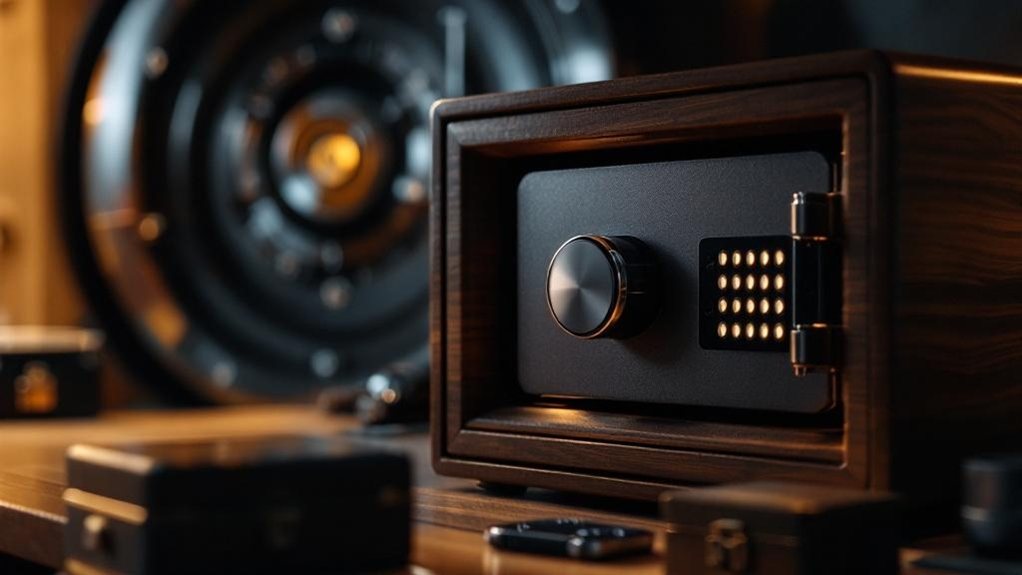

The digital fortress protecting your cryptocurrency investments is only as strong as its weakest link.
As crypto assets continue gaining value and mainstream adoption, proper storage solutions have become increasingly sophisticated—and necessary.
Hardware wallets like Ledger Nano S and Trezor remain the gold standard for serious investors, functioning like tiny digital vaults that keep private keys completely isolated from internet-connected devices (and the hackers who lurk there).
Seed phrases—those strings of seemingly random words generated during wallet setup—deserve reverence bordering on obsession. These recovery phrases allow you to restore wallet access if your device is lost or damaged.
Your seed phrase isn’t just a string of words—it’s the master key to your entire digital fortune.
Think of them as the master key to your crypto kingdom.
Lose this, and you’ve effectively thrown your digital wealth into a bottomless pit.
Many seasoned holders prefer recording seed phrases on metal backup devices—not because they’re preparing for the apocalypse (though that works too), but because unlike paper, metal doesn’t burn in house fires or dissolve when wet.
Cold storage methods extend beyond hardware wallets to include air-gapped computers and other offline devices that never touch the internet.
It’s like keeping your valuables in a bank vault instead of your front porch—dramatically reducing the attack surface.
For substantial holdings, this mild inconvenience pays significant security dividends.
Geographic redundancy shouldn’t be overlooked.
Storing all backups in one location is like putting all eggs in one basket—if that basket catches fire or floods, the omelet is ruined.
Spreading backup copies across multiple secure locations (home safe, bank deposit box, trusted relative’s home) creates a safety net against localized disasters.
Human risk factors often prove more dangerous than technical vulnerabilities.
The most secure setup crumbles when social engineering enters the picture.
Remember that your crypto holdings are not protected by FDIC insurance if exchanges fail, making personal security measures even more critical.
Never share seed phrases online, avoid discussing holdings publicly, and remember that legitimate crypto companies will never ask for your recovery phrase.
With regular security audits and a healthy dose of paranoia, crypto assets can remain secure for years—even decades—of holding.
Enabling two-factor authentication on any wallet that supports it adds an essential layer of protection against unauthorized access even if your password becomes compromised.