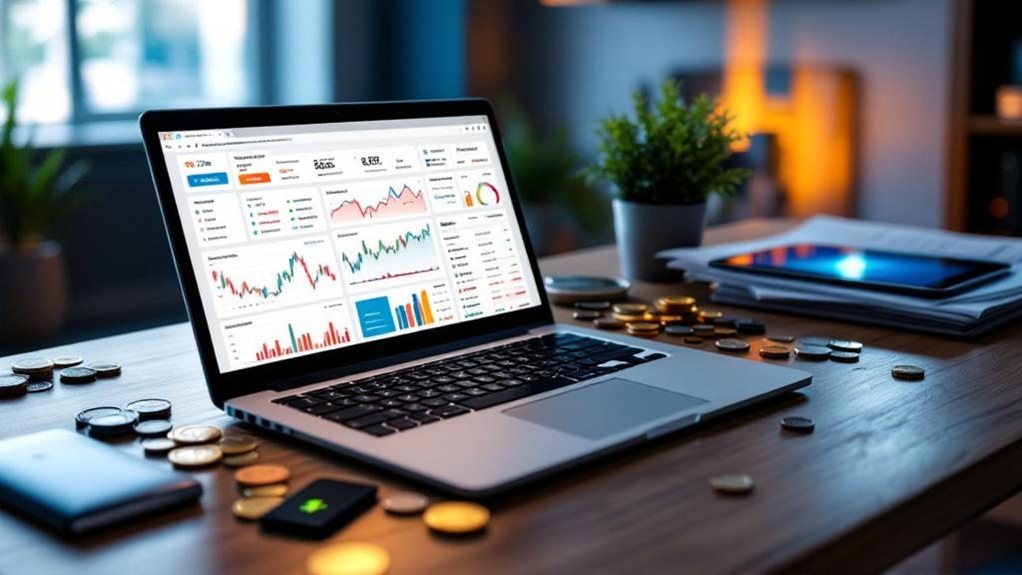

Why wade through scattered spreadsheets and multiple exchange logins when managing your cryptocurrency investments?
Cryptocurrency enthusiasts often find themselves juggling various platforms, each with its own interface and reporting system.
This digital financial juggling act can quickly become overwhelming, especially as portfolios diversify across multiple assets.
Dedicated crypto portfolio trackers have emerged as elegant solutions to this common problem.
Elegant digital toolboxes that bring order to the chaos of scattered crypto holdings.
Platforms like CoinStats, CoinMarketCap, Kubera, Delta, and CoinGecko offer unified interfaces that consolidate holdings from hundreds of sources.
These trackers basically function as the mission control center for crypto assets—a single dashboard where investors can monitor everything from Bitcoin to the most obscure altcoins and even NFTs.
The tracking landscape divides into two approaches: manual and automated.
Manual tracking—think spreadsheets and handwritten ledgers—is like trying to count raindrops during a storm.
It’s possible but prone to errors and time-consuming.
Automated tracking, on the other hand, connects directly to wallets and exchanges through APIs or CSV imports, updating balances in real time with the precision of a Swiss watch.
Most modern trackers support an impressive ecosystem of platforms—from hardware wallets like Ledger to major exchanges such as Binance and Coinbase.
Some even extend beyond crypto to traditional investments, creating a holistic financial picture.
With support for over 36,000 coins on certain platforms, even the most exotic tokens won’t escape the tracking net.
For the tax-conscious crypto holder (which should be everyone, unless prison jumpsuits suit your fashion sense), many trackers generate real-time tax reports across multiple jurisdictions.
These features automatically calculate cost basis and capital gains—turning what could be weeks of accountant-feeding paperwork into a few simple clicks.
Advanced analytics round out the tracking experience, providing performance metrics, portfolio allocation insights, and even price alerts.
This transformation of raw data into actionable intelligence helps investors make informed decisions rather than wild guesses in the volatile crypto markets.
Quality portfolio trackers also prioritize data security by following industry best practices to protect your sensitive financial information.
Leading trackers offer features for monitoring decentralized finance investments, allowing users to track yields from lending platforms and liquidity pools alongside traditional crypto holdings.
Smart tracking tools provide performance analysis capabilities that help optimize your portfolio management strategy for better long-term results.