
Why do cryptocurrency wallets seem more complicated than their leather counterparts?
Unlike traditional wallets that simply hold cash, crypto wallets safeguard your digital assets through complex cryptography.
Crypto wallets don’t just hold value—they shield it with mathematical fortresses invisible to the naked eye.
They don’t actually store your coins—they store the keys that prove you own them, like having the deed to a house rather than the physical building.
Security features represent the foundation of any reliable wallet.
Open-source options allow community auditing—imagine thousands of security experts checking your front door lock for weaknesses.
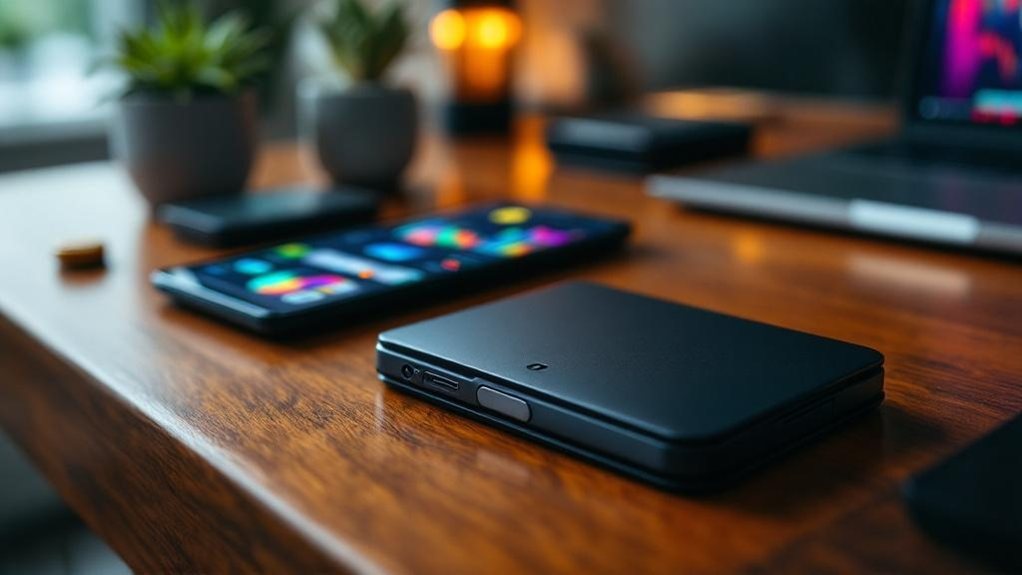
Hardware wallets like Trezor and Ledger create physical barriers between your assets and online threats, while innovations like Shamir Backup split your recovery phrase into multiple parts, so losing one piece doesn’t mean financial disaster.
The cryptocurrency ecosystem has expanded far beyond Bitcoin.
Modern wallets now support hundreds or even thousands of coins across multiple blockchains.
Before selecting a wallet, inventory your current holdings and consider future investments—does the wallet support Ethereum’s ERC-20 tokens, Solana’s ecosystem, or Bitcoin’s emerging Layer 2 networks?
User experience varies dramatically between wallets.
Some offer sleek interfaces with portfolio tracking (Exodus), while others prioritize simplicity for beginners (Coinbase Wallet).
Consider whether you prefer managing assets on mobile, desktop, or both.
The custodianship question looms large: do you want complete control (self-custody) or prefer some assistance (custodial)?
Self-custody means you alone hold the keys—exhilarating freedom paired with sobering responsibility.
Custodial solutions offer convenience but introduce third-party risk.
Your personal risk tolerance should guide your choice between hot wallets for convenience and cold storage for maximum security.
Platform compatibility matters.
Some wallets work across all major operating systems, while others are limited to specific environments.
Always check if your chosen wallet supports NFTs and DeFi if you plan to engage with these growing sectors.
Hardware wallets typically require companion apps on desktop or mobile devices.
Top-tier hardware options like Ledger utilize Secure Element chips to provide bank-grade protection for your private keys.
Finally, consider costs.
Software wallets are typically free but may charge for specific services.
Hardware options require upfront investment—think of it as buying a high-quality safe for your digital gold.
The most expensive option isn’t necessarily the best; instead, focus on the features that align with your specific needs.