
The world of cryptocurrency can seem like a digital labyrinth to newcomers, complete with unfamiliar terms and seemingly complex processes.
However, the basics of sending and receiving crypto aren’t much more complicated than sending an email—albeit with higher stakes if you mistype an address.
Setting up a crypto wallet is the essential first step.
Think of a wallet as your personal crypto bank account, but one where you truly hold the keys to your digital kingdom.
Options range from ultra-secure hardware wallets (like keeping your money in a tiny digital vault) to convenient software and web-based solutions.
During setup, you’ll receive a recovery phrase—guard this sequence of words like it contains the coordinates to buried treasure, because in the crypto world, it basically does.
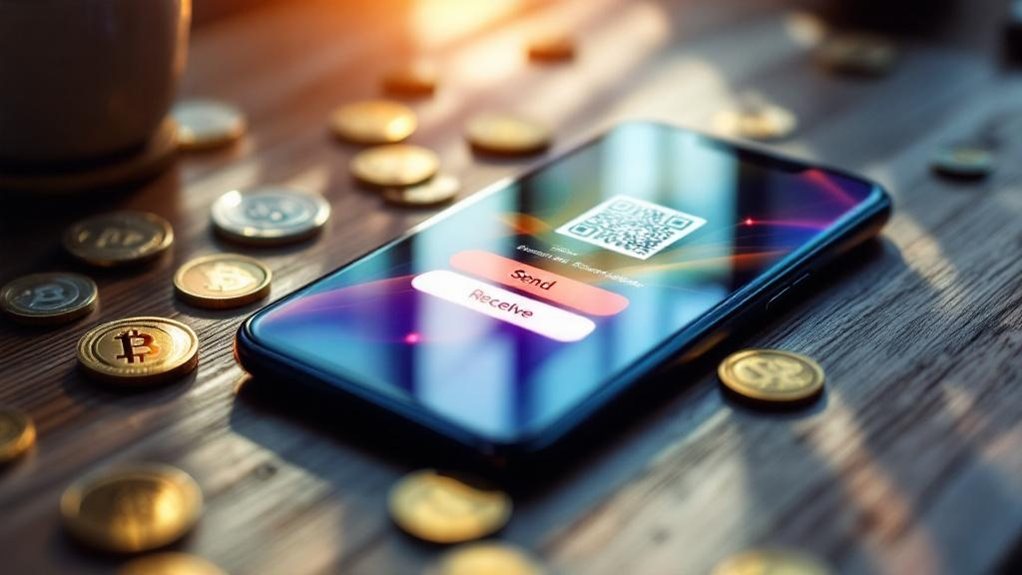
Sending cryptocurrency involves accessing to your wallet’s “Send” function, entering the recipient’s address (a string of characters that makes your WiFi password look simple), specifying an amount, and selecting a network fee.
Double-checking these details isn’t just prudent—it’s essential.
Unlike that accidental “Reply All” email, crypto transactions can’t be undone once confirmed.
The security of these transactions is guaranteed through encrypted blockchain technology that creates permanent, tamper-proof records.
Receiving crypto is considerably easier.
You simply share your public wallet address—think of it as your crypto mailbox number—with the sender.
This address can be shared as text or a QR code, making the process virtually reassuring, which is refreshing in a space where “fool” can be an expensive title to earn.
Once shared, you’ll need to wait for confirmation on the blockchain before the funds officially appear in your wallet.
Remember that your wallet doesn’t actually store the cryptocurrency itself, but rather the private keys that prove your ownership of assets on the blockchain.
Transaction fees vary wildly depending on network congestion—like surge pricing for digital taxis.
Some days sending Bitcoin costs pennies; during crypto frenzies, it might cost enough to make you reconsider the transaction entirely.
The beauty of crypto transactions lies in their borderless nature and relative speed.
Funds can move across continents faster than traditional banking systems, often with lower fees and fewer restrictions.
For beginners, starting with small test transactions is wise—consider it the crypto equivalent of dipping your toes before diving into the deep end.