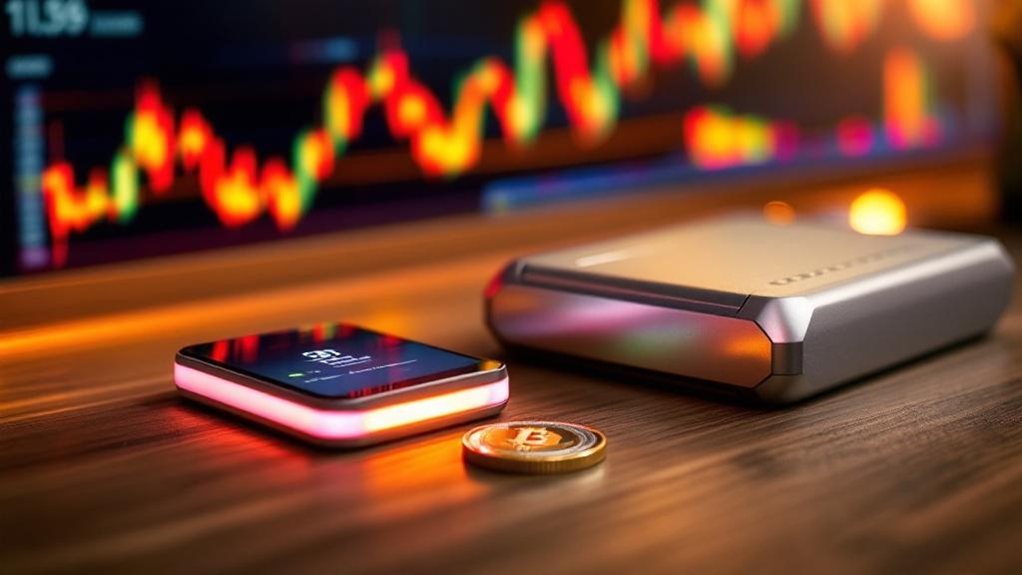

The digital frontier of cryptocurrency demands a secure home for your virtual assets, making wallet selection perhaps the most critical decision in your crypto journey.
Navigating crypto’s vast landscape begins with choosing the right digital vault for your blockchain treasures.
Crypto wallets come in two main varieties: hot and cold storage, each with distinct security implications and use cases.
Hot wallets maintain an internet connection, offering convenience for frequent traders and DeFi enthusiasts.
Think of them as your everyday spending account—accessible but potentially vulnerable to digital pickpockets lurking in cyberspace.
Popular options like MetaMask, Trust Wallet, and Exodus are free to download and support numerous cryptocurrencies and networks.
Understanding security risks involved with hot wallets can help you make better decisions about storing your crypto assets.
Cold storage, conversely, keeps your crypto offline—like storing gold bars in a vault rather than cash in your pocket.
Hardware devices from brands like Ledger, Trezor, and Tangem (starting at $59.99) physically secure private keys against online threats.
For the ultra-cautious or those hodling significant sums, this extra layer of protection proves invaluable.
The wallet universe has evolved beyond this simple dichotomy.
Multi-party computation (MPC) wallets like Zengo eliminate traditional seed phrases—those intimidating 12-24 word recovery codes that feel like crypto’s version of “one ring to rule them all.”
Some hybrid solutions, such as Exodus with Trezor integration, offer the best of both worlds.
SafePal stands out as an excellent hybrid wallet option, combining the security benefits of cold storage with the accessibility features of hot wallets.
Modern Android wallets enhance security with biometric authentication features that prevent unauthorized access to your digital assets.
When evaluating options, consider which cryptocurrencies you need to manage.
While some wallets support hundreds of assets (Coinbase, Exodus, and Atomic boast 100+), others specialize in specific ecosystems—Phantom for Solana or Sparrow for Bitcoin maximalists.
User experience varies dramatically across platforms.
Beginner-friendly interfaces with visual dashboards (Exodus) and educational resources (Coinbase Wallet) ease the learning curve for crypto newcomers.
Advanced users might prioritize features like in-wallet exchanges, staking capabilities, or DApp browsers.
The wallet decision ultimately balances security against convenience.
Hot wallets suit active traders making frequent transactions, while cold storage provides peace of mind for long-term investors.
Many crypto enthusiasts eventually adopt both, creating a thorough security ecosystem for their digital assets.