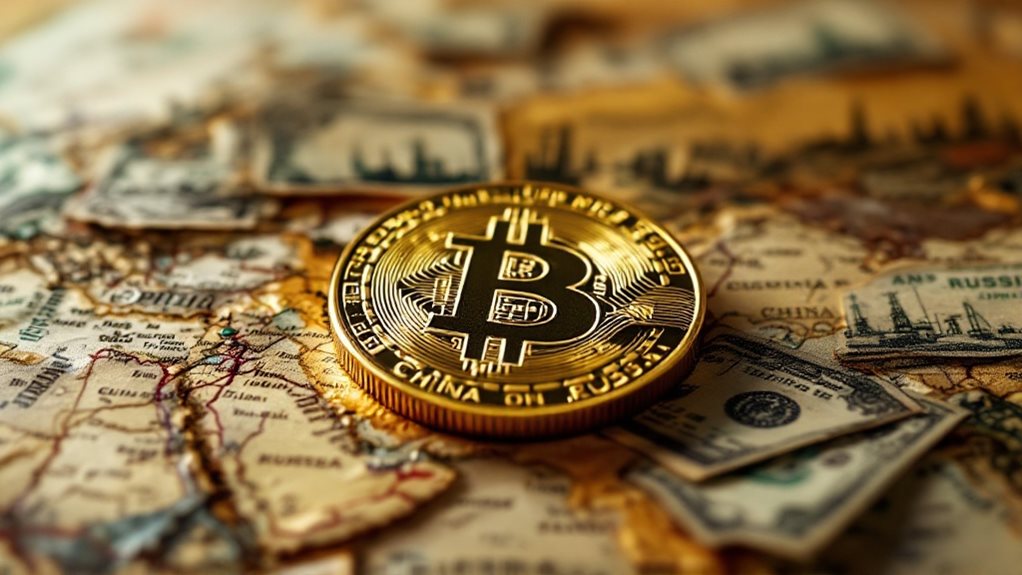

As geopolitical tensions reshape the landscape of international commerce, Bitcoin has emerged as a surprising player in global trade dynamics. China and Russia have begun settling energy transactions using the cryptocurrency, deliberately moving away from the U.S. dollar—a financial power shift that would have seemed like science fiction just a decade ago.
Bitcoin offers these nations something the traditional banking system cannot: freedom from SWIFT and Western-controlled financial infrastructure. It’s like finding a secret passage in a maze when all the main exits are blocked. This neutral digital currency enables Russia to continue oil trade with China and India despite Western sanctions that might otherwise leave their economy gasping for air. In fact, in recent months, the 24-hour trading volume of Bitcoin has seen significant fluctuations, reflecting its growing importance in global trade.
In a world of financial roadblocks, Bitcoin functions as an economic skeleton key—unlocking trade routes that sanctions attempt to padlock.
The phenomenon extends beyond major powers. Over 560 million people globally now own Bitcoin or other cryptocurrencies, representing an average ownership rate of 6.8%. Surprisingly, it’s not wealthy Western nations leading this charge. Countries with shaky economies and inflation problems—think Nigeria, Vietnam, and the Philippines—show the highest adoption rates.
India currently holds the crown for Bitcoin ownership with 93 million users, followed by China with 59 million and the U.S. with 52 million. In these regions, Bitcoin isn’t just an investment; it’s becoming a practical tool for daily transactions and remittances. Unlike traditional finance, Bitcoin’s non-custodial wallet system gives users complete control over their assets without depending on intermediaries.
This shift isn’t without challenges. Bitcoin’s notorious price swings—sometimes moving like a rollercoaster on energy drinks—create reliability issues for trade. High transaction fees and scalability problems further complicate its widespread adoption. Some policymakers view the cryptocurrency with the suspicion one might reserve for a stranger offering candy from a windowless van.
Studies using the gravity model indicate that cryptocurrency adoption can negatively impact international trade volumes, particularly in countries with weak trade institutions. Yet the trend continues as Bitcoin offers something increasingly valuable in uncertain times: an alternative to dollar dependency and a hedge against inflation. For nations feeling squeezed by American financial dominance, that’s worth the volatility.